How to Become a Certified Yoga Teacher: A Complete Step-by-Step Guide
November 23, 2026
Have you ever thought about turning your passion for yoga into a profession? Becoming a yoga teacher lets you deepen your personal practice, understand yoga’s traditional teachings, and help others improve their physical and mental well-being. However, becoming a certified yoga teacher involves more than practising different yoga postures. It requires proper training, theoretical knowledge, practical teaching experience, and a genuine understanding of yoga.
If you are wondering how to become a certified yoga teacher, the first step is to choose a recognised Yoga Teacher Training (YTT) program, usually a 200-hour foundational course. From learning asanas and pranayama to understanding yoga philosophy and teaching methodology, the right training prepares you to guide others safely and confidently.
In this guide, we will explain the complete process of becoming a yoga teacher, the qualifications you need, the different certification options, training costs, and why Nepal, particularly Pokhara, can be an excellent destination to begin your yoga journey.
What Does It Mean to Be a Certified Yoga Teacher?
A certified yoga teacher is someone who has successfully completed a structured yoga teacher training program and received a certificate from the training institution. This qualification demonstrates that the individual has studied important aspects of yoga, including asana practice, pranayama, meditation, anatomy, yoga philosophy, and teaching methodology. However, receiving a training certificate and becoming a Registered Yoga Teacher (RYT) are two different things.
Many aspiring yoga teachers choose programs registered with Yoga Alliance, an internationally known yoga education and credentialing organization. After completing an eligible program, graduates can apply for the relevant RYT credential if they meet the registration requirements. Certification and registration do not automatically guarantee teaching employment, but they provide a foundation for developing a professional yoga teaching career.
What Is the Difference Between a Yoga Certificate and RYT Registration?
Understanding the difference matters before choosing a training program.
- Yoga Teacher Training Certificate: A document your yoga school issues after you successfully complete its training program.
- Registered Yoga Teacher (RYT): A credential awarded through Yoga Alliance registration after meeting its applicable training and other requirements.
For example, completing an eligible 200-hour training program at a Yoga Alliance Registered Yoga School (RYS 200) allows you to apply for the RYT 200 credential.
Step 1: Develop a Strong Personal Yoga Practice
Before becoming a yoga teacher, it is helpful to develop a consistent personal yoga practice. You do not need to be an expert or perform advanced poses, but having some familiarity with yoga will make your training experience more meaningful. Regular practice helps you understand how different postures feel, how breathing techniques work, and how yoga influences your body and mind.
Your personal experience also helps you understand the challenges beginners may face when learning yoga. Instead of focusing only on flexibility or physical strength, try to develop awareness, patience, balance, and consistency. These qualities are important for anyone who wants to guide others through yoga.
How to Prepare Before Joining Yoga Teacher Training
You can start preparing for your training with a few simple habits:
- Practise yoga regularly, even if you begin with basic postures.
- Learn the correct alignment of foundational asanas.
- Explore basic breathing exercises and meditation.
- Read introductory materials about yoga philosophy.
- Develop a consistent daily routine.
- Practise patience and listen to your body’s limitations.
Remember, you do not need to master every yoga posture before joining a teacher training course. A good foundational program is designed to help you improve gradually.
Step 2: Choose the Right Yoga Teacher Training Course
Choosing the right Yoga Teacher Training course is one of the most important decisions in your journey to becoming a certified yoga teacher. Your training institution will influence the quality of your education, your understanding of traditional yoga, and your ability to guide students. Before enrolling, research the school’s curriculum, teaching staff, certification pathway, practical sessions, and learning environment.
For most aspiring yoga teachers, a 200-hour Yoga Teacher Training is the recommended starting point. It introduces the fundamental subjects required for teaching yoga and helps you develop the skills needed to lead beginner-level classes. If you already have a 200-hour qualification, you can explore advanced training options such as a 300-hour program.
What Are the Different Types of Yoga Teacher Training?
There are different training levels depending on your experience and professional goals.
- 200-Hour Yoga Teacher Training
A 200-hour YTT is the foundational course for aspiring yoga teachers. It introduces the essential aspects of yoga, including asana, pranayama, meditation, anatomy, philosophy, and teaching methodology.
It is suitable for beginners and practitioners who want to build a strong foundation before starting their teaching journey.
- 300-Hour Yoga Teacher Training
A 300-hour YTT is an advanced program designed for people who have already completed a recognised 200-hour training course. It focuses on advanced yoga practices, teaching techniques, anatomy, philosophy, and professional development.
- 500-Hour Yoga Teacher Training
A 500-hour training pathway combines foundational and advanced yoga education. Depending on the school’s registration and the applicable requirements, students can complete it through one qualifying 500-hour program or by combining an eligible 200-hour course with an additional 300-hour advanced program.
Which Yoga Teacher Training Course Should Beginners Choose?
If you are new to professional yoga training, a 200-hour program is generally the best choice. It introduces you to the fundamentals without assuming that you already have advanced teaching knowledge.
Starting with a foundational course allows you to understand yoga systematically, practise teaching, receive feedback, and build confidence before progressing to more advanced training.
Step 3: Understand the Yoga Teacher Training Curriculum
A quality yoga teacher training program should provide a balanced combination of practical sessions and theoretical education. Learning yoga involves much more than performing physical postures. You also need to understand the body’s movement, breathing techniques, traditional philosophy, meditation, and the responsibilities of guiding other students.
The curriculum of a standard 200-hour training program is designed to introduce these subjects in a structured way. You gradually develop the ability to practise yoga correctly, understand its principles, and communicate instructions effectively. Before choosing a school, review its syllabus to ensure that it covers the essential areas of yoga education and includes sufficient opportunities for practical teaching.
1. Asana Practice and Alignment
Asana refers to the physical postures practised in yoga. During your training, you learn foundational postures, their correct alignment, variations, and modifications.
You also develop an understanding of how different postures affect the body and how to guide students according to their abilities.
2. Pranayama and Breathing Techniques
Pranayama involves traditional yogic breathing practices. You learn techniques that develop breath awareness, concentration, and relaxation.
Understanding pranayama also helps you guide students through breathing exercises safely and appropriately.
3. Yoga Anatomy and Physiology
Anatomy and physiology help you understand how the human body works during yoga practice.
You explore muscles, bones, joints, movement patterns, and body alignment. This knowledge helps you understand physical limitations and provide suitable modifications.
4. Yoga Philosophy
Yoga philosophy introduces you to the traditional principles and teachings of yoga.
You may study:
- The eight limbs of yoga.
- The Yoga Sutras of Patanjali.
- The Bhagavad Gita.
- Traditional yogic principles.
- Mindfulness and self-discipline.
- The relationship between body, mind, and consciousness.
5. Meditation and Mindfulness
Meditation is an important part of traditional yoga education. You explore techniques that help develop concentration, self-awareness, and mental balance.
Regular meditation practice can also help you understand how to guide students through simple mindfulness sessions.
6. Teaching Methodology
Teaching methodology prepares you to become an instructor rather than simply a yoga practitioner.
You learn how to plan classes, demonstrate postures, communicate instructions, observe students, and create a supportive learning environment.
7. Practical Teaching Experience
Practical teaching sessions allow you to apply what you have learned.
You practise guiding yoga sessions, receive feedback from trainers, and improve your confidence in communicating with students.
Step 4: Complete Your 200-Hour Yoga Teacher Training
Once you have selected a suitable school, the next step is to complete your 200-hour Yoga Teacher Training program. This is the foundational stage where you bring together the practical and theoretical knowledge needed to begin teaching yoga. The training usually involves a structured daily schedule, including physical practice, breathing exercises, meditation, lectures, discussions, and teaching sessions.
Many students choose an intensive residential program because it allows them to focus on learning without everyday distractions. During the course, you are expected to participate actively, practise regularly, complete learning activities, and demonstrate your understanding of the subjects. Successfully completing the training and meeting the school’s assessment requirements is essential before receiving your graduation certificate.
How Long Does a 200-Hour Yoga Teacher Training Take?
The duration depends on the school’s schedule and learning format.
- Intensive residential training: Usually around three to four weeks.
- Part-time training: May take several months.
- Weekend training: Spread across a longer period.
- Online or hybrid training: Depends on the program structure and applicable standards.
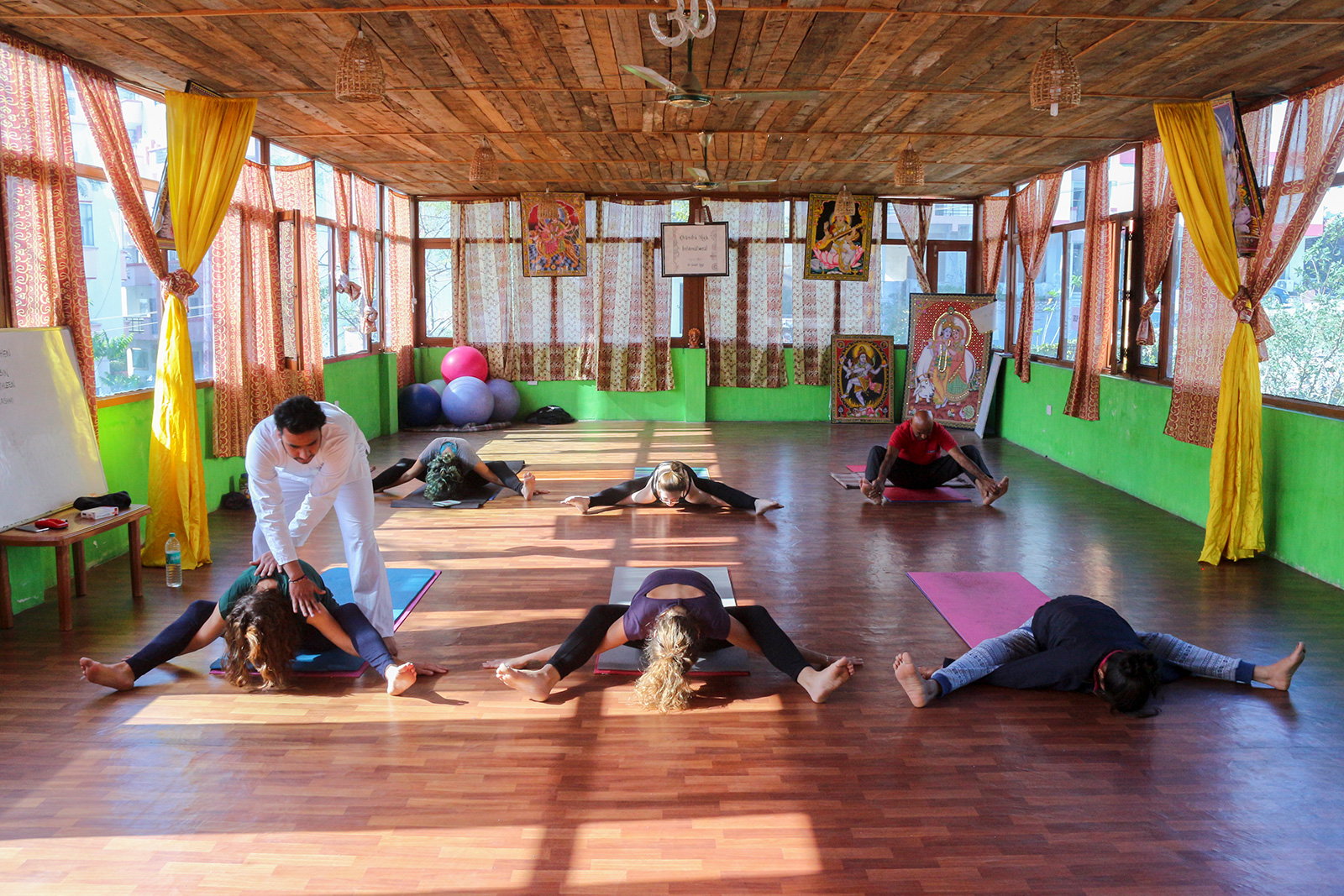
For example, Chandra Yoga Nepal offers an immersive 28-day 200-hour Yoga Teacher Training program in Pokhara, combining practical yoga sessions with theoretical learning.
What Happens During a Residential Yoga Teacher Training?
A residential program gives you an opportunity to follow a structured learning routine while living in a dedicated training environment.
A typical training day may include:
- Morning meditation and pranayama.
- Hatha Yoga or Ashtanga Vinyasa practice.
- Yoga philosophy and anatomy classes.
- Teaching methodology sessions.
- Afternoon practical training.
- Evening meditation or self-study.
The exact schedule varies between schools, but the main purpose is to provide a balanced learning experience.
Step 5: Complete Your Assessments and Receive Your Certificate
Completing the required training hours is important, but becoming a competent yoga teacher also requires demonstrating that you understand what you have learned. Most structured teacher training programs include practical and theoretical assessments to evaluate your progress. These assessments help trainers determine whether you can perform and explain yoga techniques, understand basic anatomy, apply yoga philosophy, and guide a class effectively.
Depending on the institution, your assessment may include written examinations, practical demonstrations, teaching sessions, assignments, and participation throughout the program. Once you successfully meet the school’s graduation requirements, you receive your Yoga Teacher Training certificate. Keep this certificate safe because it may be required when applying for professional registration, further training, or teaching opportunities.
What Are the Common Assessment Methods?
Your training school may evaluate you through:
- Written examinations on yoga philosophy and anatomy.
- Practical demonstrations of yoga postures.
- Pranayama and meditation practice.
- Teaching demonstrations.
- Class planning and sequencing assignments.
- Participation and overall performance.
What Should Your Training Certificate Include?
If you intend to apply for Yoga Alliance registration, make sure your graduation certificate meets its documentation requirements.
Check that it includes the correct school name, training designation, completion date, your legal name, and the required authorised signature.
You can review the Yoga Alliance certificate requirements before enrolling and completing your training.
Step 6: Apply for Yoga Alliance RYT Registration
After completing your qualifying yoga teacher training, you can explore registration with Yoga Alliance if your school and program meet its requirements. Yoga Alliance provides credentials such as RYT 200 and RYT 500 to eligible yoga teachers. These credentials help demonstrate that you have completed training through an appropriately registered school and meet the applicable registration standards.
It is important to understand that Yoga Alliance registration is a professional credential, not a government-issued teaching licence or a universal legal requirement for teaching yoga. Requirements can vary depending on the country, employer, studio, and type of teaching work you want to pursue. Before applying, check your training school’s current registration status, confirm your eligibility, and review the latest application requirements directly through Yoga Alliance.
How to Register as an RYT 200?
The general process involves the following steps:
Step 1: Complete an Eligible 200-Hour Training
Successfully complete a 200-hour teacher training program through a Yoga Alliance Registered Yoga School (RYS 200).
Step 2: Obtain Your Training Certificate
Receive your official certificate after meeting the school’s graduation and assessment requirements.
Step 3: Create Your Yoga Alliance Account
Visit the official Yoga Alliance website and create an account to begin your application.
Step 4: Submit Your Application
Provide the required training details and documentation according to the current application process.
Step 5: Complete Registration Requirements
Follow the applicable membership, ethical commitment, and credential requirements.
Step 6: Maintain Your Professional Development
Continue developing your teaching skills through further learning, practice, and applicable continuing education requirements.
For the latest details, visit Yoga Alliance’s teacher training and registration guide.
Step 7: Gain Practical Teaching Experience
Receiving your yoga teacher training certificate is an important achievement, but becoming a confident instructor takes time and consistent practice. Teaching yoga involves understanding different students, communicating clearly, observing body movements, and adapting instructions according to individual needs. Your initial teaching experiences help you develop these skills and understand how to apply the knowledge gained during training.
Start by practising with friends, family members, or small groups in a comfortable environment. You can also look for opportunities to assist experienced teachers or participate in community yoga sessions. Focus on creating safe and supportive classes rather than trying to demonstrate advanced postures. With regular practice, constructive feedback, and continued learning, you can gradually build confidence and develop your own teaching approach.
How to Gain Experience as a New Yoga Teacher
Here are some practical ways to start:
- Conduct beginner-friendly yoga sessions.
- Assist experienced yoga instructors.
- Offer small group classes.
- Participate in community wellness programs.
- Explore teaching opportunities at yoga studios.
- Practise class sequencing and communication.
- Request feedback from students and experienced teachers.
Why Is Practical Experience Important?
Practical experience helps you understand the difference between learning yoga and teaching yoga.
As a teacher, you need to recognise that every student has different physical abilities, learning styles, and experience levels. Regular teaching helps you develop patience, improve your communication, and make your classes more accessible.
Step 8: Explore Career Opportunities as a Certified Yoga Teacher
After completing your foundational training and developing practical teaching experience, you can explore different career opportunities in the wellness industry. Yoga teaching is not limited to working in a traditional yoga studio. Depending on your interests, qualifications, experience, and local requirements, you may work with fitness centres, wellness resorts, retreat organisations, private clients, or online communities.
Some teachers prefer to specialise in particular yoga styles, while others combine yoga with meditation, wellness activities, or other complementary practices. Your career path will depend on the skills you develop and the type of students you want to work with. Building a professional network, gaining experience, and continuing your education can help you create more opportunities as a yoga instructor.
Where Can You Work as a Certified Yoga Teacher?
Some common career opportunities include:
| Career Option | What You Can Do |
| Yoga studios | Conduct regular group yoga classes |
| Fitness centres | Offer yoga sessions alongside fitness programs |
| Wellness resorts | Guide yoga and meditation sessions |
| Yoga retreats | Teach during residential wellness programs |
| Private instruction | Provide individual or small-group classes |
| Online teaching | Conduct virtual yoga sessions |
| Corporate wellness | Offer workplace yoga and relaxation sessions |
| Self-employed instructor | Develop your own yoga classes or teaching business |
Can You Become a Full-Time Yoga Teacher?
Yes. Many people build full-time careers in yoga teaching, although it usually takes time to develop a consistent student base and professional reputation.
You can begin with part-time classes and gradually expand into studio teaching, private sessions, workshops, or retreat programs.
The key is to continue learning, build meaningful connections with students, and maintain a responsible approach to teaching.
How Much Does It Cost to Become a Certified Yoga Teacher?
The cost of becoming a certified yoga teacher depends on the training institution, destination, course duration, accommodation, meals, and facilities included in the program. A residential course may have a higher overall fee than a non-residential program, but it can offer additional value through accommodation, daily meals, structured classes, and an immersive learning environment.
When comparing yoga teacher training fees, do not focus only on the advertised course price. Check what is included, whether additional registration fees apply, and whether the school offers the type of certification pathway you want. Nepal is worth considering for students looking for an immersive yoga learning experience in a culturally rich and naturally beautiful destination.
What Factors Affect Yoga Teacher Training Costs?
The main factors include:
- Course duration: Intensive and extended programs may have different fee structures.
- Location: Training costs vary depending on the country and destination.
- Accommodation: Private rooms and shared rooms may have different prices.
- Meals: Some residential courses include daily meals.
- Teaching facilities: Training resources and facilities can influence the overall fee.
- Certification: Check whether separate registration or membership charges apply.
Is Yoga Teacher Training in Nepal Affordable?
Nepal can be an attractive option for international students seeking a residential yoga education experience. Compared with some other popular yoga destinations, Nepal may offer competitive training packages, depending on the school and course inclusions.
Pokhara is particularly appealing because students can combine structured yoga learning with a peaceful natural environment, traditional Nepali hospitality, and opportunities to explore the surrounding region.
Before enrolling, compare the full course package, including accommodation, vegetarian meals, teaching hours, study materials, and certification arrangements.
Why Choose Nepal to Become a Certified Yoga Teacher?
Nepal offers a unique environment for people interested in traditional yoga, meditation, and personal development. Known for its Himalayan landscapes, spiritual heritage, and diverse cultural traditions, the country attracts students who want to experience yoga beyond a regular classroom setting. Learning yoga in Nepal gives you an opportunity to explore traditional practices while experiencing a different lifestyle and cultural environment.
For international students, the combination of structured training, natural surroundings, and local hospitality can make the learning experience particularly meaningful. Whether you are interested in foundational teacher training or developing your personal practice, Nepal provides several destinations to consider. Among them, Pokhara stands out for its peaceful atmosphere, scenic surroundings, and growing interest in yoga and wellness education.
1. Traditional Yoga and Spiritual Heritage
Nepal has a long-standing cultural connection with Hindu and Buddhist traditions, meditation, and spiritual practices.
Studying yoga here gives you opportunities to explore these cultural influences while learning from experienced instructors.
2. Peaceful Natural Surroundings
The country’s natural environment provides a welcoming setting for meditation, reflection, and daily yoga practice.
The Himalayan landscapes and peaceful surroundings can help you focus on your learning journey.
3. Cultural Experience
Living and studying in Nepal allows you to experience local traditions, food, hospitality, and cultural diversity.
For international students, this can make the training experience more enriching.
4. Residential Learning Opportunities
Many yoga schools in Nepal offer residential training packages that combine classes, accommodation, meals, and practical learning.
This allows students to focus on their training without having to organise every part of their daily schedule separately.
Why Choose Pokhara for Yoga Teacher Training?
Pokhara is one of Nepal’s most popular destinations for yoga and wellness education. Located near the Annapurna mountain range, the city is known for its beautiful lakes, peaceful surroundings, and welcoming atmosphere. These features make it an appealing destination for students who want to focus on yoga practice, meditation, and personal growth.
Unlike a busy urban environment, Pokhara offers opportunities to slow down and connect with nature. You can develop a structured daily routine while experiencing the local culture and exploring the surrounding landscapes. For international students, choosing a yoga teacher training course in Pokhara can also provide an opportunity to experience Nepal beyond its popular trekking destinations. It is a suitable choice for those seeking a balance between education, personal development, and cultural exploration.
What Makes Pokhara Special for Yoga Students?
Peaceful Learning Environment
The calm atmosphere provides a suitable setting for yoga practice, meditation, and self-reflection.
Beautiful Himalayan Views
The surrounding mountain landscapes create an inspiring environment for students.
Natural Attractions
Students can explore Phewa Lake, local viewpoints, and nearby natural attractions during their free time.
Cultural Experience
Pokhara offers opportunities to experience Nepali food, traditions, and hospitality.
International Community
The city welcomes travellers and wellness enthusiasts from different parts of the world, creating opportunities to meet people with similar interests.
Start Your Yoga Teacher Training Journey with Chandra Yoga Nepal
If you are looking for a place to begin your yoga teacher training journey, Chandra Yoga Nepal offers a 200-hour Yoga Teacher Training program in Lakeside, Pokhara. Our 28-day residential training experience is designed to help students develop a strong foundation in traditional yoga practices while building the knowledge and practical skills needed to become confident practitioners and aspiring teachers.
The program combines Hatha Yoga and Ashtanga Vinyasa with important areas of yoga education, including pranayama, meditation, anatomy, yoga philosophy, and teaching methodology. Students have the opportunity to learn through structured sessions, daily practice, and practical teaching activities in a supportive environment. Whether you want to become a yoga instructor or deepen your personal practice, Chandra Yoga Nepal provides an opportunity to experience yoga in the peaceful surroundings of Pokhara.
What Will You Learn at Chandra Yoga Nepal?
Our 200-hour Yoga Teacher Training covers essential areas of yoga education.
Hatha Yoga and Ashtanga Vinyasa
Explore traditional Hatha Yoga and dynamic Ashtanga Vinyasa practices while developing your understanding of asanas, alignment, and movement.
Pranayama and Meditation
Learn traditional breathing techniques and meditation practices that encourage concentration, mindfulness, and self-awareness.
Yoga Philosophy
Understand traditional yogic teachings and explore how yoga principles can be applied in everyday life.
Anatomy and Physiology
Develop an understanding of the human body, movement, posture, and safe yoga practice.
Teaching Methodology
Build the skills needed to guide yoga sessions, communicate with students, and develop confidence as an aspiring instructor.
What Is Included in the Training Experience?
The 28-day residential program provides an immersive learning environment with:
- Structured daily yoga classes.
- Hatha Yoga and Ashtanga Vinyasa practice.
- Meditation and pranayama sessions.
- Yoga philosophy and anatomy lessons.
- Practical teaching experience.
- Accommodation with attached bathroom facilities.
- Vegetarian meals.
- Opportunities to explore the surroundings.
Who Can Join the 200-Hour Training at Chandra Yoga Nepal?
The program is suitable for:
- Beginners interested in becoming yoga teachers.
- Regular yoga practitioners who want to deepen their knowledge.
- Individuals interested in traditional yoga and meditation.
- International students seeking residential yoga training in Nepal.
- People interested in personal development and a more mindful lifestyle.
You do not need to be an expert in advanced yoga postures to begin. What matters most is your willingness to learn, practise consistently, and develop a deeper understanding of yoga.
Ready to take the first step towards becoming a yoga teacher?
Explore the 200-Hour Yoga Teacher Training at Chandra Yoga Nepal and contact our team to learn more about upcoming course dates, availability, fees, and accommodation.
Frequently Asked Questions About Becoming a Certified Yoga Teacher
1. How do I become a certified yoga teacher?
To become a certified yoga teacher, choose a suitable teacher training program, complete the required training hours, pass the school’s assessments, and receive your graduation certificate. You can then apply for an appropriate professional registration, such as RYT 200, if your training meets Yoga Alliance requirements.
2. How many hours of training do I need to become a yoga teacher?
A 200-hour Yoga Teacher Training is the standard foundational pathway for aspiring yoga teachers. Advanced options include 300-hour and 500-hour training programs.
3. Can beginners become certified yoga teachers?
Yes. Beginners can join a 200-hour Yoga Teacher Training program. You don’t need to be an expert in yoga, but regular practice, commitment, and a willingness to learn matter.
4. Do I need to be flexible to become a yoga teacher?
No. Flexibility isn’t required to become a yoga teacher. Understanding alignment, practicing safely, and learning how to guide students are more important than performing advanced postures.
5. How long does it take to become a certified yoga teacher?
An intensive 200-hour program may take approximately three to four weeks. Other programs may take several months, depending on their schedules and learning formats. Chandra Yoga Nepal offers a 28-day residential 200-hour training program in Pokhara.
6. Is Yoga Alliance certification necessary to teach yoga?
Yoga Alliance registration is not a universal legal requirement for teaching yoga. However, it is a recognised professional credential that some studios, employers, and students may value. Requirements vary by location and employer.
Final Thoughts: Begin Your Journey Towards Becoming a Yoga Teacher
Becoming a certified yoga teacher is a journey that involves consistent practice, proper education, and a genuine interest in helping others. From developing your personal practice to completing a 200-hour Yoga Teacher Training and gaining practical teaching experience, every step contributes to your growth as a yoga practitioner and instructor.
You do not need to be an expert or have years of experience to begin. What matters is choosing the right training program, learning from qualified teachers, and remaining committed to your personal development.
If you are ready to turn your interest in yoga into a meaningful learning experience, consider starting with a 200-hour Yoga Teacher Training at Chandra Yoga Nepal in Pokhara.
Experience traditional yoga practices, learn essential teaching skills, and take your first step towards becoming a confident yoga teacher.
Your journey to teaching yoga begins with your willingness to learn.